

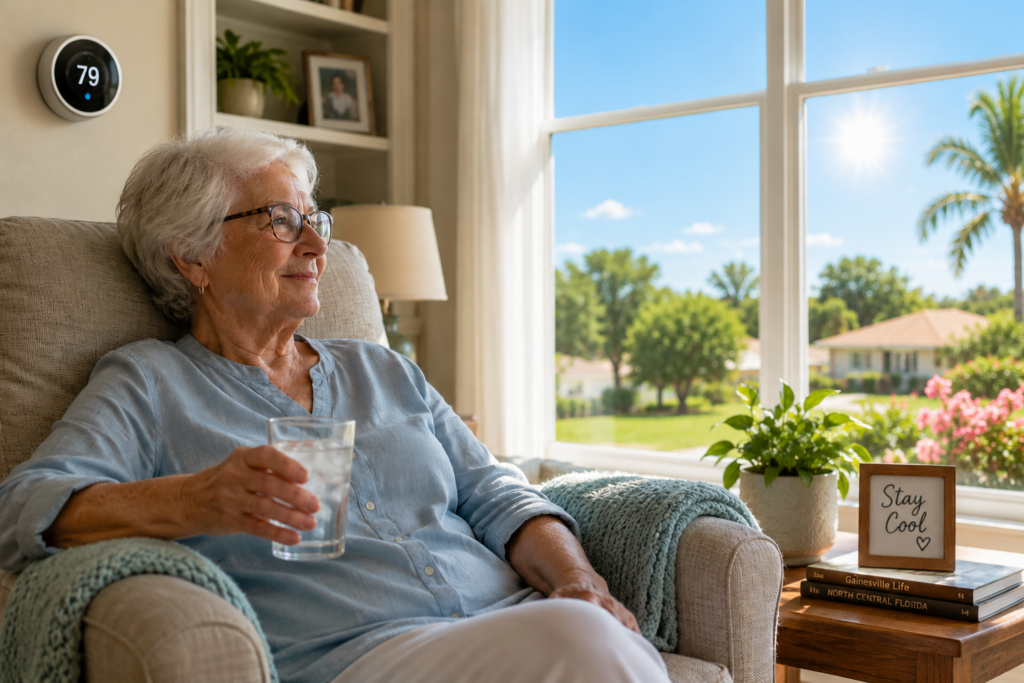
The 2026 World Cup (soccer) just wrapped up. Aside from the sheer athleticism and drama of the Beautiful Game, many of us have enjoyed watching visitors from Europe experiencing Southern hospitality and other aspects of American culture, including the ubiquity of air conditioning.
For a few weeks in June and July of this year, air conditioning was a (pardon the pun) hot topic. It was often cited as another example of American exceptionalism. But it got me thinking about my own mom and how comfortable she seemed in her south Florida home WITHOUT air conditioning. (The horror!)
Many times, my wife and our kids would visit mom in the house I grew up in when the indoor temperature must have been at least 85 degrees. Her home was built in the 1940s, before central A/C was a thing. (This is Miami we’re talking about.) Growing up, we had two window units in the home, but one of them used to blow a fuse every time we turned it on. It seemed that my mom wanted the indoor temperature to match her age, well into her upper 80s.
It got me to thinking: what’s the ideal indoor temperature for an aging senior?
Turns out, the question is more complicated than you might think. That’s because “ideal” is not the same thing as “comfortable” or “safe.” Especially for older adults.
Comfortable Doesn’t Always Mean Ideal
Many people will tell you that older adults should keep their homes somewhere between 72°F and 78°F. While that’s a reasonable general recommendation, it doesn’t mean that every 80-year-old is going to feel comfortable at 75°F.
In fact, many older adults prefer temperatures of 78°F, 80°F, or even slightly warmer. It’s not unusual for grandma or grandpa to insist that the house feels chilly when younger family members are perfectly comfortable.
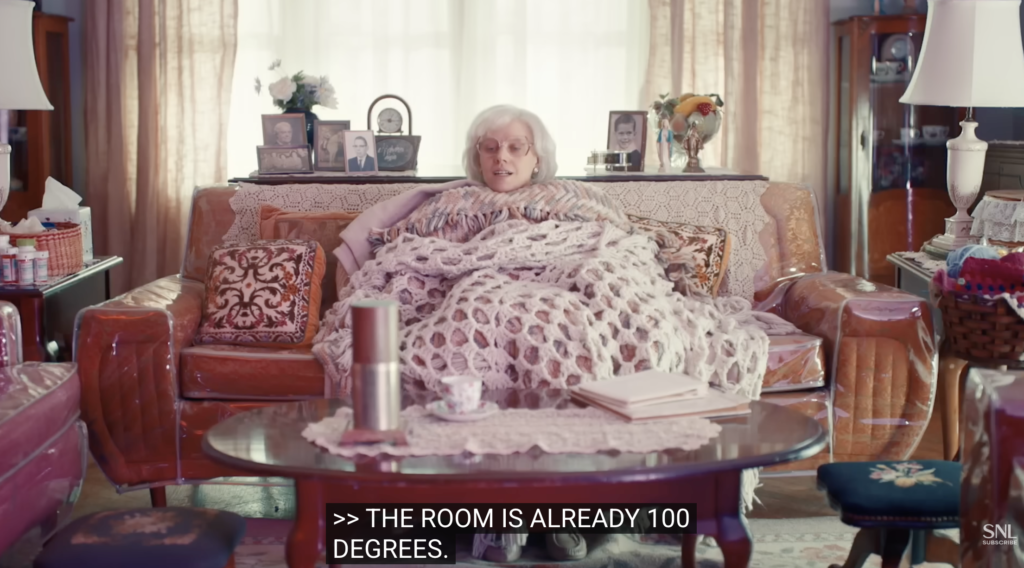
Our elders are not imagining it. Their bodies really do experience temperature differently. (As humorously referenced in this Saturday Night Live commercial parody for the fictional product, the Amazon Echo Silver – Amazon Echo – SNL)
The “Shifted Thermostat” or “How Your Body’s Thermostat Changes With Age”
One way to think about aging is that our internal thermostat gradually shifts over time.
As we get older, several things happen:
- We lose muscle mass, which helps generate body heat.
- We lose some of the fat beneath our skin that acts as insulation.
- Our metabolism slows down.
- Blood circulation becomes less efficient.
- Our bodies become less responsive to temperature changes.
A room that feels pleasantly cool to a 40-year-old may feel downright chilly to an 85-year-old. That doesn’t mean one person is right and the other is wrong—it’s simply that their bodies are interpreting the environment differently.
Why Don’t Experts Recommend 80 Degrees?
If so many older adults prefer warmer temperatures, why don’t medical experts simply recommend setting the thermostat to 80°F?
Because recommendations are designed to balance comfort and safety for a wide range of people.
Age doesn’t just make us more sensitive to cold. It can also make us more vulnerable to heat.
Older adults may:
- Sweat less efficiently.
- Become dehydrated more easily.
- Feel less thirsty than they should.
- Have heart or lung conditions that make heat more difficult to tolerate.
- Take medications that affect the body’s ability to regulate temperature.
An indoor temperature of 80°F may be perfectly comfortable for one person but feel oppressive or tiring for another.
Don’t Forget About Florida Humidity
Living in North Central Florida adds another wrinkle to the conversation: humidity. (They don’t call Ben Hill Griffin Stadium at Florida Field “The Swamp” for nothing!)
Humidity affects how efficiently our bodies cool themselves. Even indoors, higher humidity levels can make a room feel warmer and less comfortable.
That’s why it’s important to think beyond the thermostat setting itself. Air conditioning doesn’t just cool the air—it removes humidity, which plays a huge role in comfort and safety.
An 80°F home that is dry and well air-conditioned may feel quite comfortable. An 80°F home that is humid and stuffy is another story altogether.
So What’s the Right Temperature?
The best temperature for an older adult is one that balances three things:
- Comfort
- Safety
- Individual health needs
For many people over 80, that temperature may very well be around 80°F.
If an older adult is all of the following, there is usually no reason to worry simply because they like to keep the thermostat warmer than everyone else:
- Comfortable
- Well hydrated
- Free from heat-related symptoms
- Living in a properly air-conditioned home
- Not advised otherwise by their physician
The Bottom Line
Sorry to disappoint you, but there is no magic thermostat setting that works for every older adult.
Instead of asking, “What’s the ideal temperature?” it may be more helpful to ask three questions:
- Is the person comfortable?
- Is the temperature safe for their health and activity level?
- Is the home’s humidity being properly controlled?
The next time you visit an older loved one whose house feels like a tropical resort, remember that their internal thermostat may have shifted over the years. Make sure they’re adequately hydrating themselves. If they can tolerate it, encourage the use of a fan. These hacks can help ensure they avoid overheating.
Because what feels too warm to you may feel just right to them—and that’s perfectly normal.
